Coronation, Lombard style

At time I started writing this post, the anglophone press was running wall-to-wall stories in anticipation of the coronation of Charles III of the United Kingdom. There’s tons to read about the British regalia, the rituals, the religious ceremony, and cultural symbolism. Which led me to think about the all-important ritual of king-making in the Lombard era. And for once, we know (or can surmise) a fair bit about it!

Throughout this post, I rely heavily on the work of Stefano Gasparri, particularly his book La Cultura Tradizionale dei Longobardi. Struttura Tribale e resistenze pagane, as well as some of his more recent articles, especially “La regalità longobarda. Dall’età delle migrazioni alla conquista carolingia,” in Alto Medioevo Mediterraneo. I highly recommend Gasparri’s work to those interested in Lombard history and culture. Particularly in La Cultura Tradizionale dei Longobardi, he combines academic rigor with an almost intuitive understanding of the Lombard sources.

The first thing to note is that the Lombards didn’t have a coronation…because they didn’t have a crown–at least not in the period I’m concerned with.
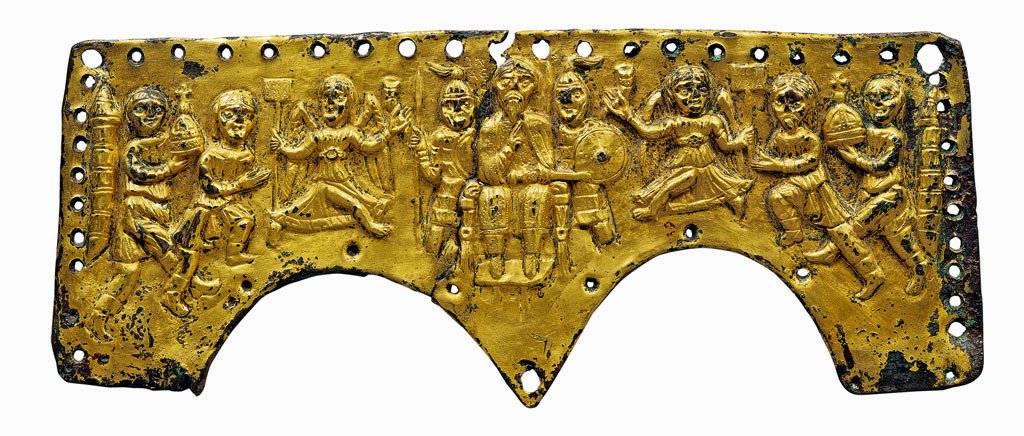

The so-called “Helm of Agilulf” (also known as the Lamina di Valdinievole). It is believed to depict the Lombard king Agilulf (center), flanked by Lombard warriors as he’s presented with offerings. It’s a typically Roman triumphal scene with interesting Lombard elements. For example, the figures of “winged victory” hold drinking horns. Note that Agilulf himself is not wearing a crown or diadem. There is, likewise, a “crown” associated with Agilulf’s queen, Theodelinda, but there’s some debate over whether it was actually hers and, if so, whether it was intended to be worn or offered to a house of worship as a so-called “votive crown.”
Continue reading

A View for the Ages? Part 1

Therefore, when king Alboin with his whole army and a multitude of people of all kinds had come to the limits of Italy, he ascended a mountain which stands forth in those places, and from there as far as he could see, he gazed upon a portion of Italy. Therefore this mountain it is said, was called from that time on “King’s Mountain.” They say wild oxen graze upon it, and no wonder, since at this point it touches Pannonia, which is productive of those animals….

Paul the Deacon, History of the Lombards, Book 2, ch. 8 (trans. William Dudley Foulke, 1907, ed. Edward Peters 1974)

In this short passage, Paul the Deacon describes the migration of the Lombards into Italy. It seems straightforward enough. We know the journey’s starting point: Pannonia. We know Alboin established the first Italian duchy at Forum Iulii (modern Cividale del Friuli). We have the picturesque detail of the oxen-dotted “King’s mountain.” How difficult could it be to deduce a path that connects these points?

But as ever, nothing is quite as simple as it seems.

Continue reading

What is a “fara”?

This year, Alboin, King of the Longobards, leaving and burning all of Pannonia, his fatherland, with all his army, with wives and all his people occupied Italy in “fara”; and there some were killed by illness, some by hunger, and others by the sword.

Marius Aventicensis,Chronicon, 569.1 (580)

Writing circa 580, the chronicler Marius Aventicensis recorded that the Lombards arrived in Italy in 569. This is one of the earliest attestations of the Lombard migration and a great example of how scant and tantalizing the sources from this period can be!

Marius Aventicensis says that the Lombards undertook their migration “in fara”–a term which he apparently presumed his audience would understand. In decades past, the word has been the topic of sometimes strenuous debate among historians and philologists. More recently, a groundbreaking paleogenetic investigation has shed new light on this controversial subject, and it is this data that informs my own answer to the perennial question: what exactly was a fara?

Continue reading

An esoteric ecclesiastic excision?

As anyone who’s read this blog can attest, I like history, even the dry, complicated bits. Maybe especially the complicated bits. But even my tolerance has its limit. And that limit is the Controversy of the Three Chapters.

What was the Controversy of the Three Chapters, you may ask? You don’t want to know. Seriously. It’s needlessly complex and boring. One of the greatest descriptions I’ve come across was in Thomas Hodgkin’s magisterial, eight-volume “Italy and Her Invaders,” published in 1896. His work is absolutely out-of-date and in many places inaccurate. Still, Hodgkin writes with inimitable 19th century British flair, his plummy accent practically dripping from the page. To wit:

It is necessary to remind the reluctant reader of that dreary page in ecclesiastical history known as the controversy of the Three Chapters.​ Most futile and most inept of all the arguments that even ecclesiastics ever wrangled over, that controversy nominally turned on the question whether three Syrian bishops of irreproachable lives, Theodore of Mopsuestia, Theodoret of Cyrrhus, and Ibas of Edessa, were to be stigmatised, a century or more after their deaths, as suffering the punishment of everlasting fire, because the Emperor Justinian, sitting in the library of his palace at the dead of night, and ceaselessly turning over the rolls of the writings of the Fathers, had discovered in the works of these three men the germs of the Nestorian heresy. That was nominally the issue, but as all men knew, something more than this trifling matter was really involved. The writings of these three Syrians had been received without condemnation, if not with actual applause, at the great Council of Chalcedon; and the real question was whether the Eastern Emperors should be allowed to inflict a backhanded blow on the authority of that Council by throwing out the souls of these three hapless Syrians to the Monophysite wolves of Egypt and of Asia, who were for ever howling after the Imperial chariot.

Hodgkin, Italy and Her Invaders, Book V, Chapter 11 (1896)
Continue reading

Women’s Traces, Part 3: Living Gifts

I had to invent a mother for Rosamund (whose own existence is up for debate in certain quarters, an interesting topic for another day). But what of Alboin’s maternal line? He, at least, is a historical figure, so he must have had a mother.

There are two theories as to her identity. The first–and most prevalent–is that she was a princess, the daughter of the last independent king of the Thuringians. This would make sense. Both Alboin and his father seem to have had some sort of of Thuringian connection.

So far, so simple. But as ever, when you pull on random a thread from this period, a whole host of fascinating stories tumble into view.

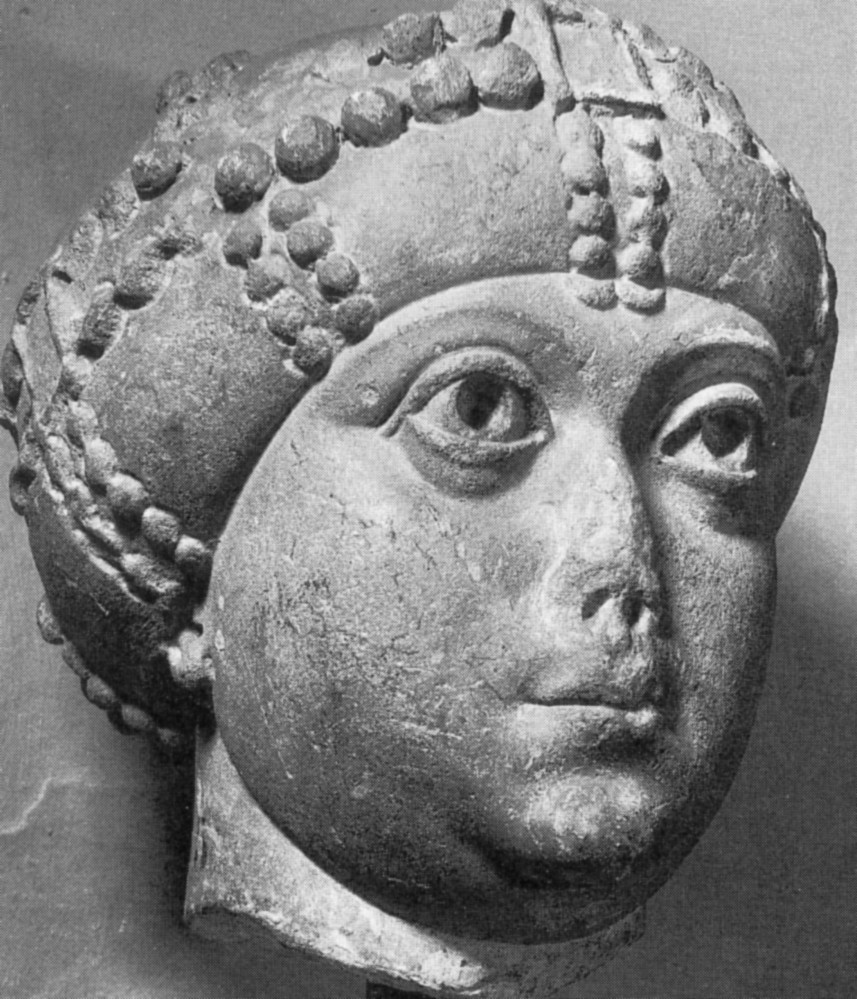
This may be the face of one of her female relatives….Portrait bust of Amalasuintha from the Capitoline Museums, Rome.
Continue reading

When is a fly not a fly?

The Gothic language is a real challenge for me, especially since I am not a linguist and have no background in Germanic languages. Still, I think the judicious use of Gothic adds a certain flavor to the writing, especially when describing concepts of cultural significance or when use of an English-language term feels especially anachronistic. Of course, the use of Gothic as the language of the Gepids is not without its own issues to take into consideration–a topic I’ve addressed elsewhere.

I am currently working on a scene in which Rosamund witnesses the “blooming of the the Tisza”–a natural spectacle which sees millions of long-tailed mayflies (Palingenia longicauda) emerge from their larval phase, mate, and die, all in a matter of hours. But as I prepared to write, I faced a quandary: what would Rosamund call a mayfly?

The dance of the mayflies
Continue reading

Coins of the Gepids

Cunimund (and possibly Thurisind) supposedly minted silver coins (half-siliqua, quarter-siliqua) in the style of Roman currency in Sirmium. The Ostrogoths first restarted the Roman mint in Sirmium when they occupied the city between about 505 and 535. Coins from the period of Ostrogothic occupation commonly bear the names of the then-ruling Roman emperor on the obverse, and the monogram of Theoderic, the Ostrogothic king, on the reverse. They definitely struck coins in the name of Anastasius (491-518) and Justin I (518-527), and it is possible they minted coins during the first years of Justinian’s rule beginning in 527.

Despite the caption, this was almost certainly an Ostrogothic coin; note the name of Emperor Anastasius on the obverse and the monogram of Theoderic on the reverse. The inscription on reverse reads INVICTA ROMA (“invincible Rome”)

It appears minting operations ceased for a time during the transition from Ostrogothic to Gepidic control of the city, about 527-535. The exact date of the Gepid takeover is not definitively known, but the earliest possible date for resumption of minting activity would be around 536. Either Thurisind or Cunimund may have struck coins in the name of Justinian, and Cunimund may have struck coins in the name of Justin II (565-576) for a brief time before the destruction of the Gepid state in 567.

Continue reading

The Gepid State, Part 3–The Queen

A final figure of note must be the queen. Fundamentally, a queen was simply the wife of a king. She need not be his only official sexual partner. Kings of the early medieval period sometimes kept recognized concubines. Some even had multiple wives. Regardless of personal arrangements, the queen took precedence over the other women in the king’s orbit.

In the 6th century, the position of queen was essentially personal. She was not anointed in a special ceremony that we know of. A woman became queen when she married a king–provided that was her husband’s will. But marriage itself was less “hard and fast” in those days. In a Christian context, marriage was not a sacrament, and divorce was no taboo in the “barbarian” traditions. The position of queen was, therefore, inherently precarious.

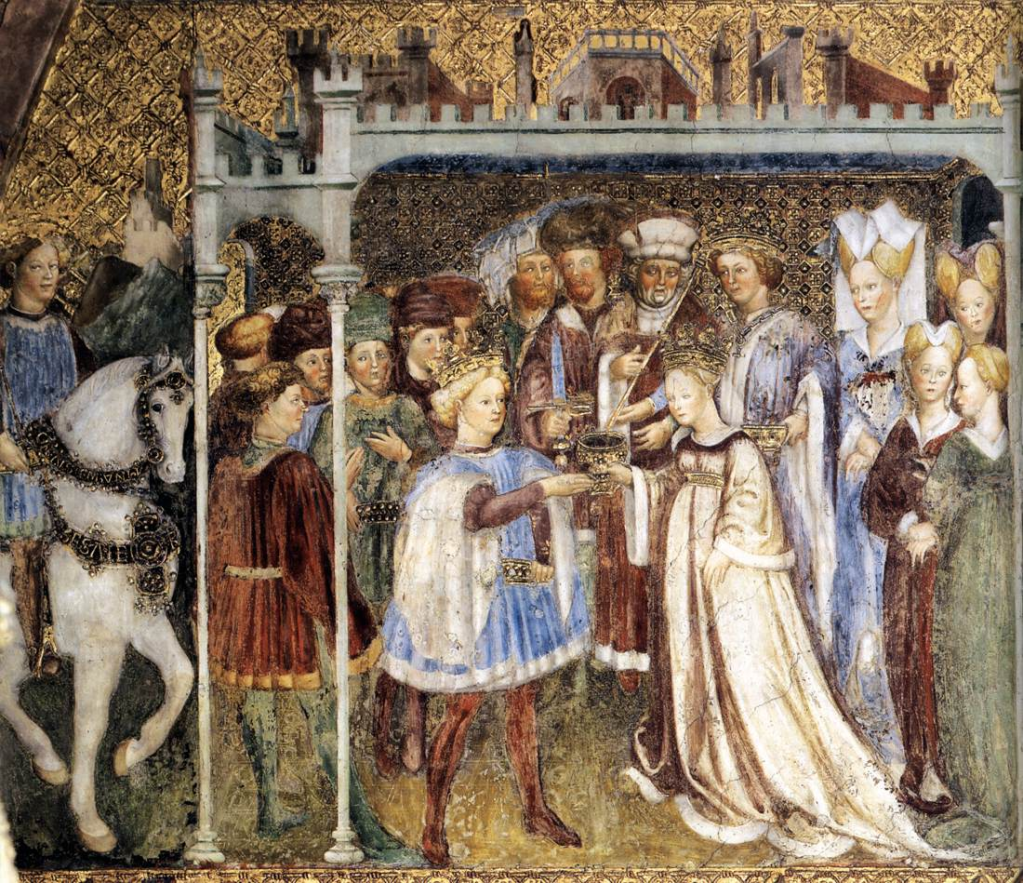
In a chapel in Monza Cathedral, frescoes depict the life of Lombard Queen Theodelinda. In this scene, Theodelinda meets her royal husband-to-be and, significantly, offers him refreshment. Zavattari & sons, 1444.
Continue reading

This Means War

The Gepid kingdom ultimately succumbed to an alliance between the Lombards and the Avars. The Avars were relative newcomers on the eastern European scene. Their origins have long been shrouded in mystery, but the prevailing theory proposes that they were refugees from the Rouran Empire of the Mongolian steppe, which had been overthrown by the Göktürks. For over a thousand years, their true origins were a mystery waiting to be solved.

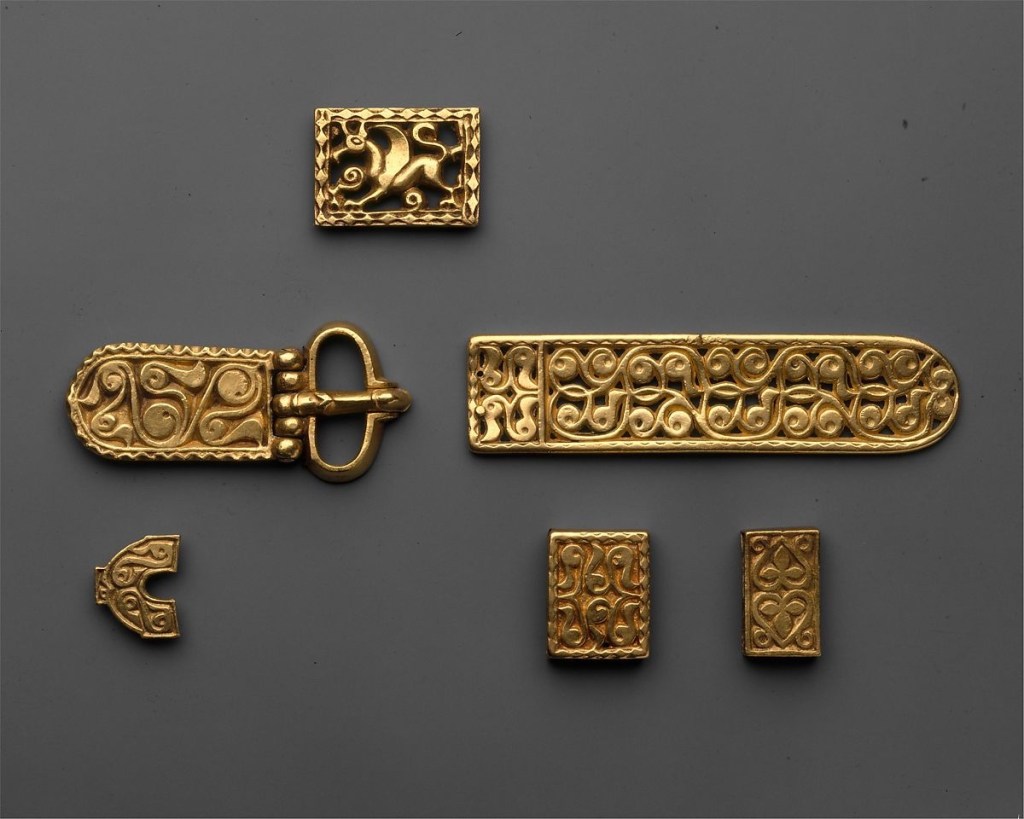
8th century Avar belt fittings, including a belt mount with the figure of a winged horse or griffin. Image via the Met Museum.
Continue reading