The cup(s) in question–Part 3

The traditional version of Rosamund’s story is quite straightforward: the proud princess, the tragic fall, revenge, betrayal, death. Although it makes for an exciting story, it all strikes me as a little too neat.

I believe there is another story hidden between the lines of the legend, one that sheds light on the politics and culture of Rosamund’s time. Obviously, this is deeply speculative on my part. But it’s also the aspect of Rosamund’s tale that I find most intriguing. Songs and poems and plays have presented the “Tragedy of Alboin and Rosamund.” I want a glimpse of the gritty, foreign reality lurking behind the legend.

This requires analysis, not only of Rosamund’s experience, but that of her contemporaries. I believe that close examination can reveal elements of their reality that would otherwise remain obscure.

Continue reading
The Gepid State, Part 1–Models of kingship

Nothing has caused me more of a headache than trying to imagine the political organization of the Gepids. Very little is known about it, aside from a few stray comments in various sources. We know that they had a king, and at various times there may have been more than one. There was, apparently, some sort of a council of nobles or tribal chiefs that had influence over certain military and political decisions. Beyond that, little can be known for certain.

Frankish King Clovis I (~466-511) dictates to a scribe, attended by his retainers and a rather unfriendly hound. Facsimile of an illumination from the 14th century Grandes Chroniques de Saint-Denis.

Other “states” (loosely defined!) of the time are somewhat less mysterious. We have a sense of the complex court and political offices of the Eastern Empire. Among the “barbarians,” the Merovingian court is relatively well documented, but due to the particular circumstances in Frankish kingdom, this many not shed much light on the organization of the Gepids around the same time. The Franks, after all, incorporated a Gallo-Roman elite and Catholic ecclesiastics into their administrative state. I’ve seen no evidence that these factors were present to a significant degree in “Gepidia.” Indeed, for a time the Gepids may have engaged in a project of constituting themselves as a political and ethnic body precisely in contrast to Roman precedent.

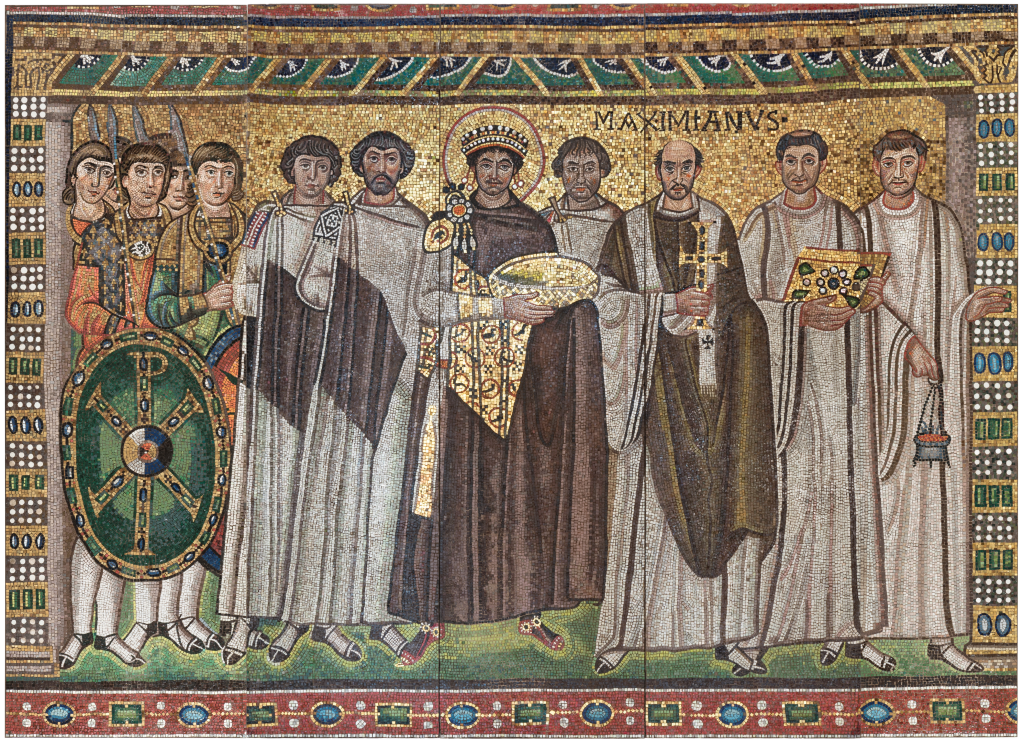
The Eastern Roman Emperor Justinian, flanked by members of the imperial court. We see religious officers, aristocrats, and armed retainers. 6th Century mosaic from the Basilica of San Vitale in Ravenna.

Yet surely there was a Gepidic court. Even Attila had secretaries, after all.

Continue reading

Who was Rosamund?

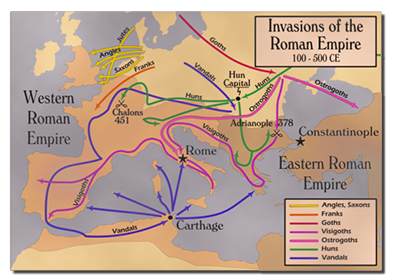
Rosamund was a princess of a people known as the Gepids, who lived north of the Danube and east of the Tisza in the early- to mid-6th century. The Gepids were one of the more prominent tribes of the so-called Migration Era, which saw large-scale movements of human populations across Europe. This is the period that saw Ostrogoths and Lombards in Italy, Franks in Gaul, Visigoths in Spain, and Vandals in North Africa, to say nothing of the “smaller” tribes. You might remember it from some very startling (and frankly confusing) maps in your high school history book that involved arrows meandering all over Europe.

barbaianmap
Something like this…

The Gepids are a particularly mysterious group. They left no documents, no monuments. Their settlements were built from ephemeral materials and left only subtle traces–the occasional hearth, post holes, and loom weights. They did have a habit of burying their treasure in times of stress, which has led to accidental discoveries of phenomenal quality. Their tombs have been plundered and pillaged for hundreds of years and are often so disturbed that the dead no longer speak to us clearly.

Continue reading

Where we’re going

Welcome to my small corner of the internet! This blog is designed as place for me to archive and unpack my research as I work on my novel, A Queen’s Cup, a retelling of the tale of Rosamund, princess of the Gepids. The story is set in the 6th century in regions that would later become Hungary, Serbia, and Italy. Here, I’ll discuss historical context and historiography, political history, linguistics, religion, and other background topics.

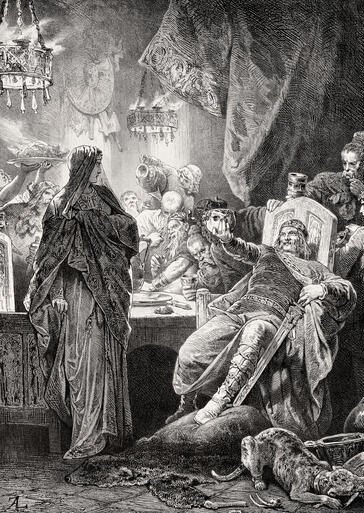
Alboin, king of the Lombards, forcing his wife Rosamund to drink from the skull of her father, artist unknown

I consider it part of my “job” as a writer of historical fiction to open a window onto another time and place. But historical fiction is, fundamentally, still fiction. One of the most interesting aspects of working in this genre is figuring out when, how, and to what degree historical “fact” must give way to narrative imperatives. This blog is a look behind the scenes of my decision-making process. It will also, hopefully, shine a light on historical elements that don’t fit within the story I’m trying to tell.

Continue reading