A Material World

I dwell quite a bit on the material culture of Rosamund’s world. She is deeply attentive to her own attire and that of others and interested in all markers of wealth and status–jewels and ornaments, horses and tack, buildings and decor, food and drink. Although these descriptions will (hopefully!) help a reader to imagine the scene, that is not the primary reason I choose to linger over such details. A person’s clothing and possessions would have “spoken” to Rosamund, communicating their position in the social hierarchy relative to her. In an intensely stratified and relational society, such information was both interesting and essential.

This Hunnic fibula is the inspiration for a precious gift Rosamund receives from her grandfather (via the Walters Art Museum)
Continue reading

Who was Rosamund?

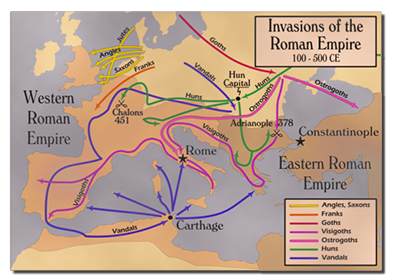
Rosamund was a princess of a people known as the Gepids, who lived north of the Danube and east of the Tisza in the early- to mid-6th century. The Gepids were one of the more prominent tribes of the so-called Migration Era, which saw large-scale movements of human populations across Europe. This is the period that saw Ostrogoths and Lombards in Italy, Franks in Gaul, Visigoths in Spain, and Vandals in North Africa, to say nothing of the “smaller” tribes. You might remember it from some very startling (and frankly confusing) maps in your high school history book that involved arrows meandering all over Europe.

barbaianmap
Something like this…

The Gepids are a particularly mysterious group. They left no documents, no monuments. Their settlements were built from ephemeral materials and left only subtle traces–the occasional hearth, post holes, and loom weights. They did have a habit of burying their treasure in times of stress, which has led to accidental discoveries of phenomenal quality. Their tombs have been plundered and pillaged for hundreds of years and are often so disturbed that the dead no longer speak to us clearly.

Continue reading

Where we’re going

Welcome to my small corner of the internet! This blog is designed as place for me to archive and unpack my research as I work on my novel, A Queen’s Cup, a retelling of the tale of Rosamund, princess of the Gepids. The story is set in the 6th century in regions that would later become Hungary, Serbia, and Italy. Here, I’ll discuss historical context and historiography, political history, linguistics, religion, and other background topics.

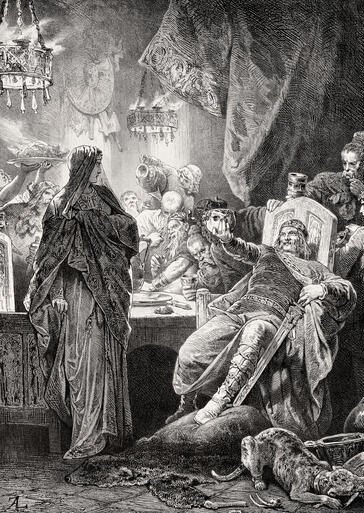
Alboin, king of the Lombards, forcing his wife Rosamund to drink from the skull of her father, artist unknown

I consider it part of my “job” as a writer of historical fiction to open a window onto another time and place. But historical fiction is, fundamentally, still fiction. One of the most interesting aspects of working in this genre is figuring out when, how, and to what degree historical “fact” must give way to narrative imperatives. This blog is a look behind the scenes of my decision-making process. It will also, hopefully, shine a light on historical elements that don’t fit within the story I’m trying to tell.

Continue reading