Women’s Traces, Part 3: Living Gifts

I had to invent a mother for Rosamund (whose own existence is up for debate in certain quarters, an interesting topic for another day). But what of Alboin’s maternal line? He, at least, is a historical figure, so he must have had a mother.

There are two theories as to her identity. The first–and most prevalent–is that she was a princess, the daughter of the last independent king of the Thuringians. This would make sense. Both Alboin and his father seem to have had some sort of of Thuringian connection.

So far, so simple. But as ever, when you pull on random a thread from this period, a whole host of fascinating stories tumble into view.
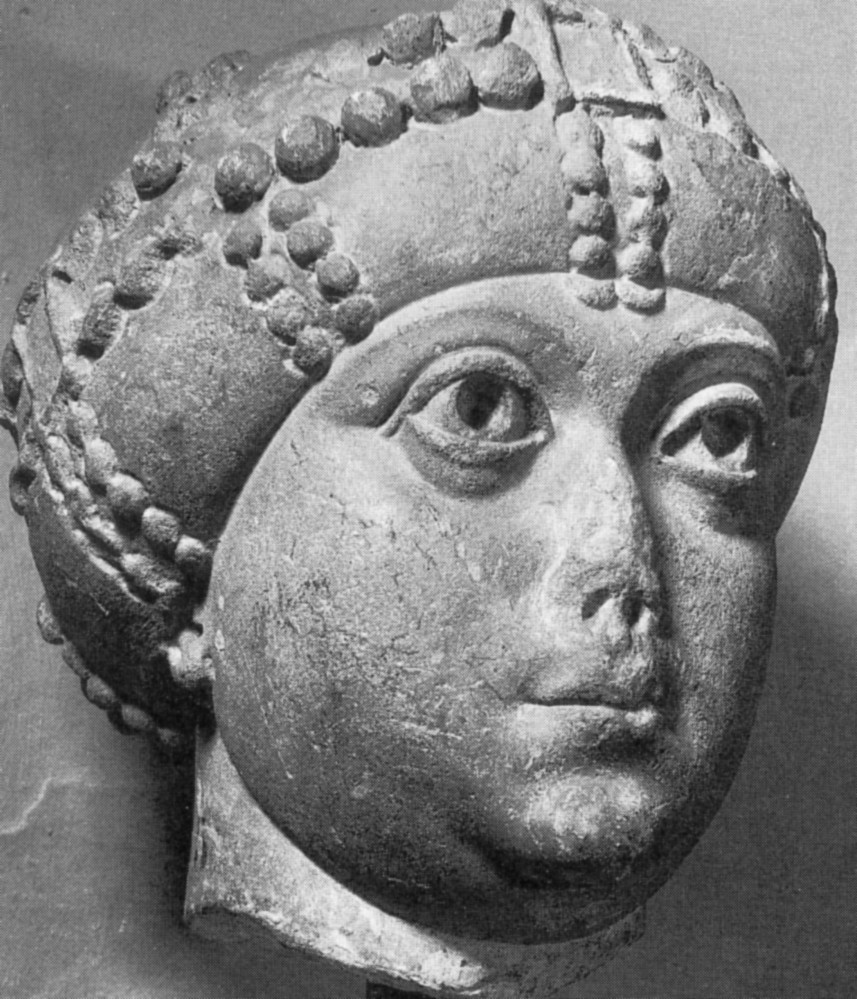
This may be the face of one of her female relatives….Portrait bust of Amalasuintha from the Capitoline Museums, Rome.
Continue reading

The Gepid State, Part 3–The Queen

A final figure of note must be the queen. Fundamentally, a queen was simply the wife of a king. She need not be his only official sexual partner. Kings of the early medieval period sometimes kept recognized concubines. Some even had multiple wives. Regardless of personal arrangements, the queen took precedence over the other women in the king’s orbit.

In the 6th century, the position of queen was essentially personal. She was not anointed in a special ceremony that we know of. A woman became queen when she married a king–provided that was her husband’s will. But marriage itself was less “hard and fast” in those days. In a Christian context, marriage was not a sacrament, and divorce was no taboo in the “barbarian” traditions. The position of queen was, therefore, inherently precarious.

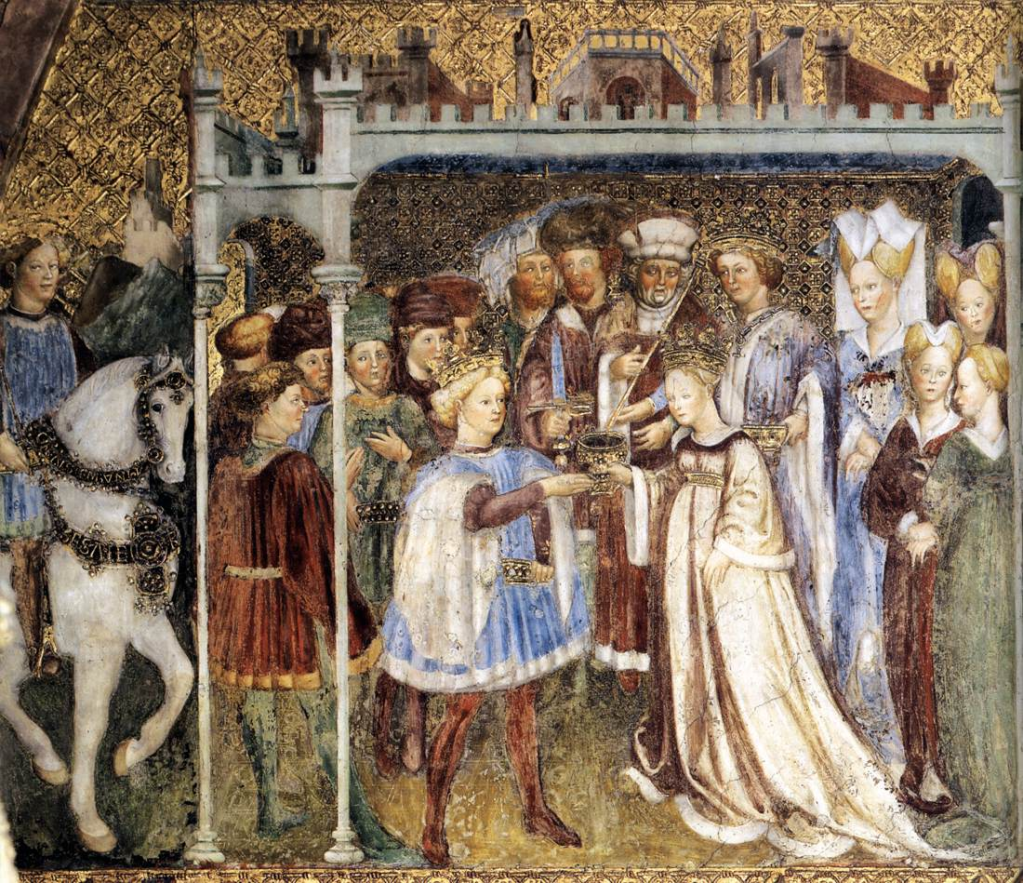
In a chapel in Monza Cathedral, frescoes depict the life of Lombard Queen Theodelinda. In this scene, Theodelinda meets her royal husband-to-be and, significantly, offers him refreshment. Zavattari & sons, 1444.
Continue reading

The cup(s) in question–Part 3

The traditional version of Rosamund’s story is quite straightforward: the proud princess, the tragic fall, revenge, betrayal, death. Although it makes for an exciting story, it all strikes me as a little too neat.

I believe there is another story hidden between the lines of the legend, one that sheds light on the politics and culture of Rosamund’s time. Obviously, this is deeply speculative on my part. But it’s also the aspect of Rosamund’s tale that I find most intriguing. Songs and poems and plays have presented the “Tragedy of Alboin and Rosamund.” I want a glimpse of the gritty, foreign reality lurking behind the legend.

This requires analysis, not only of Rosamund’s experience, but that of her contemporaries. I believe that close examination can reveal elements of their reality that would otherwise remain obscure.

Continue reading

The cup(s) in question–Part 2

In this battle Alboin killed Cunimund, and made out of his head, which he carried off, a drinking goblet. This kind of a goblet is called among them “scala,” but in the Latin language “patera.”

Paul the Deacon, History of the Lombards, Book I, Chapter XXVII

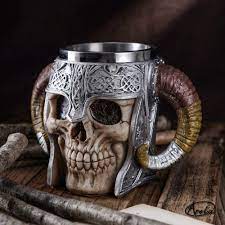
The most infamous cup in Rosamund’s tale is surely the one fashioned from her father’s skull. When I first read about it, I definitely imagined something (for lack of a better word…) goth–appropriate for what I took to be a particularly macabre trophy.

But upon further research, I realized my initial impressions were probably pretty far off-base–both in terms of the cup’s likely form and its significance.

Continue reading

The cup(s) in question–Part I

As is probably apparent by the working title of my manuscript, cups play a central role in Rosamund’s story. Obviously the first cup that comes to mind–and the most infamous–is the one made from her father’s skull which ignites her eventual vengeance. But cups, the liquor they held, and the words spoken over them may have had a special significance in Rosamund’s culture.

Continue reading