The Grubenhaus of Babel

What language did the Gepids speak? They left no written traces that would provide an answer to this simple question. It is possible they spoke a Gothic dialect, but if so, how similar was their spoken language to the what we know of Gothic based on limited written survivals?
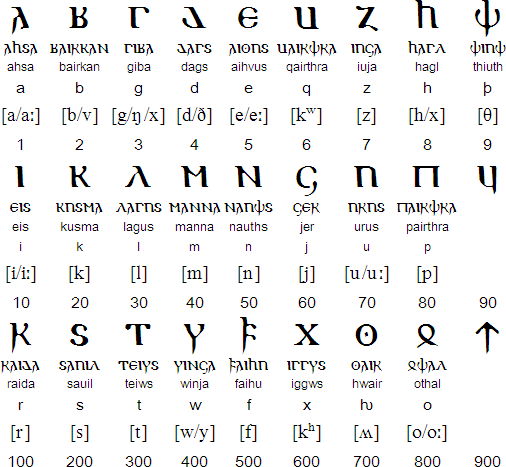
The Gothic alphabet, via omniglot.com

Most of what we know about the Gothic language comes from a few fragments of the Gothic-language Bible, which was first translated under the supervision of a bishop named Ulfilas. (Incidentally, most of these these precious codices are 6th century copies of older manuscripts that have not survived.) Ulfilas (Wulfila in Gothic) was the son of Christian Greeks captured by Goths. He was, thus, raised with a foot in two worlds. He eventually became a priest and a missionary among the Goths, converting many of them to Christianity in the 4th century. As part of his work, Ulfilas decided to translate the Greek bible into Gothic, but first, he needed to devise a Gothic alphabet. His letters seem to draw on Greek, Latin, and Runic influences.

Continue reading
How did the Gepids get their name?

When writing about Rosamund’s people, I faced a threshold question–what should they be called? Today, they are commonly known in English as the Gepids, but their ethnonym has come down to us in many forms. Greek and Latin sources name them Ghpaides, Gibidi, Gibites, Gepidae, Gebidae, Gebodi, etc. The Origo Gentis Langobardorum refers to them variously as Gyppidos and Gibidos. In the Old English poem Widsið, they are the Gefðum; in Beowulf, they are the Gifðum (both names in the dat. pl.)

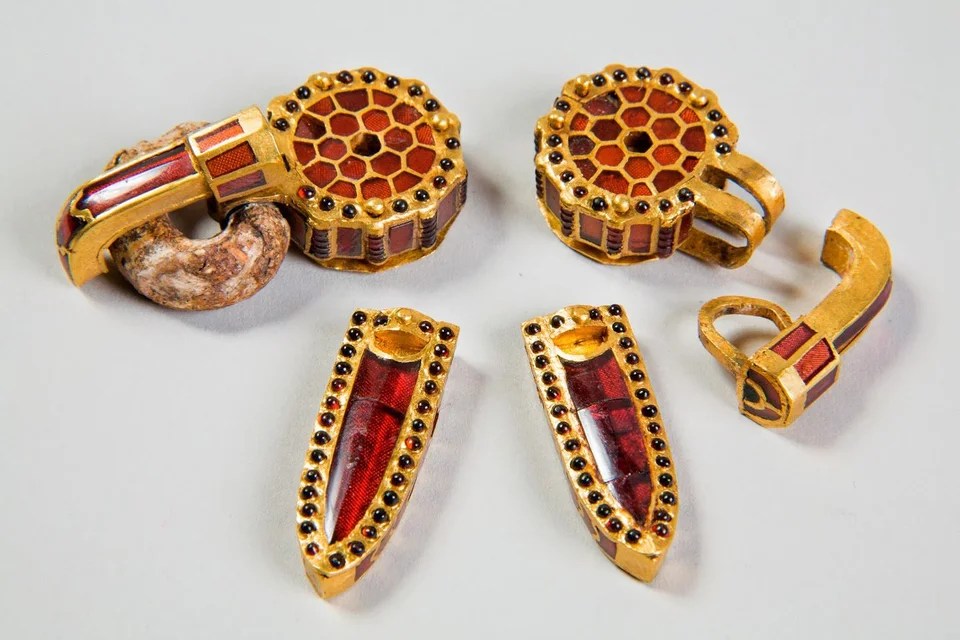
5th century Gepidic buckles and belt fittings from the Treasure of Apahida (via the National Museum of Romanian History)

Taken together, these variations do offer certain clues as to the Gepids’ true name. It seems safe to say that it began with a voiced velar plosive (-g-) sound, with the second consonant being a bilabial plosive (-b- or -p-). B and P seem relatively fluid in names from this period (this is likely due to phonetic shifts underway at the time). For example, the Thuringian king Bisin is named as Pisin in some sources. But even if we can guess what their name sounded like, what did it mean?

Continue reading