Rosamund’s Sirmium

Rosamund would have presumably spent some amount of time in Sirmium (now Sremska Mitrovika, Serbia), which was under Gepid control in the mid-6th century. This city on the banks of the Sava was once the capital of the Roman province of Pannonia Inferior and, in the 3rd-century, served as a capital of the empire. It boasted forums, basilicas, enormous baths, an aqueduct, a hippodrome, an imperial palace complex, a fortified circuit wall, an extramural necropolis, and numerous urban villas, to say nothing of its more workaday businesses, marketplaces, and habitations. In its heyday, it would have looked something like this…

A model from the museum in Sremska Mitrovika

There aren’t many novels set in this part of the world in the 5th and 6th centuries (at least in English), but those that I’ve been able to find seem to treat Sirmium as a bastion of Roman society, its glory tarnished by the travails of history but still largely intact. My research suggests this was far from the case.

Continue reading
How did the Gepids get their name?

When writing about Rosamund’s people, I faced a threshold question–what should they be called? Today, they are commonly known in English as the Gepids, but their ethnonym has come down to us in many forms. Greek and Latin sources name them Ghpaides, Gibidi, Gibites, Gepidae, Gebidae, Gebodi, etc. The Origo Gentis Langobardorum refers to them variously as Gyppidos and Gibidos. In the Old English poem Widsið, they are the Gefðum; in Beowulf, they are the Gifðum (both names in the dat. pl.)

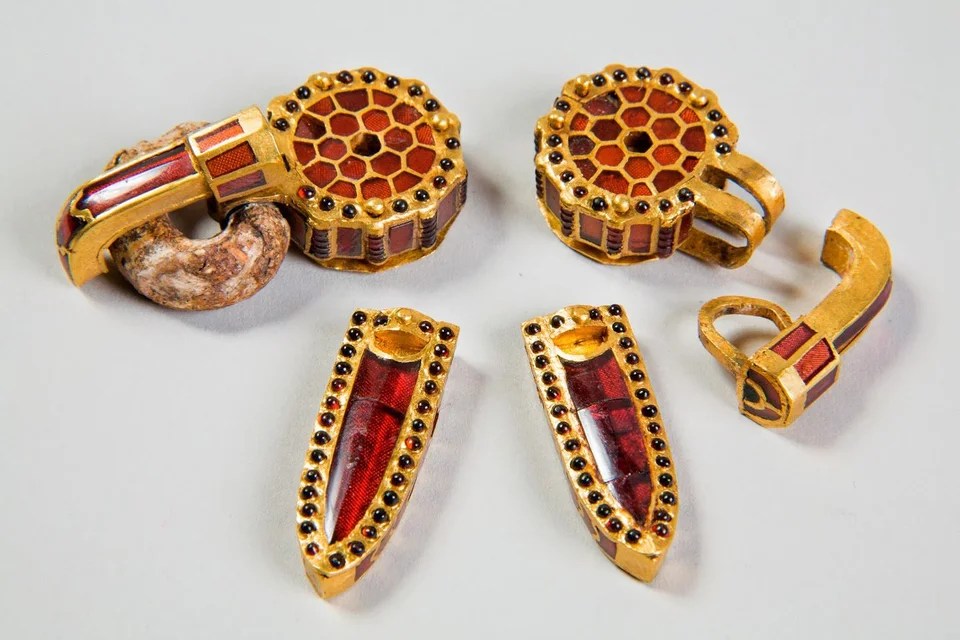
5th century Gepidic buckles and belt fittings from the Treasure of Apahida (via the National Museum of Romanian History)

Taken together, these variations do offer certain clues as to the Gepids’ true name. It seems safe to say that it began with a voiced velar plosive (-g-) sound, with the second consonant being a bilabial plosive (-b- or -p-). B and P seem relatively fluid in names from this period (this is likely due to phonetic shifts underway at the time). For example, the Thuringian king Bisin is named as Pisin in some sources. But even if we can guess what their name sounded like, what did it mean?

Continue reading