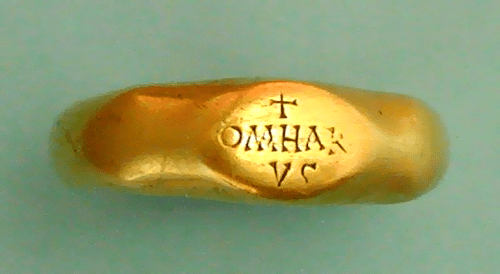
The matter of names has proven surprisingly tricky. The first issue is that there’s very little uniformity in the historical record or in the literature as to most of the names in question. For example, Rosamund’s grandfather is variously referred to as Thurisind, Turisind, Torisind, and Thorisind. These are all, most likely, approximations of his actual name, which may have included the components thauris (which probably meant “daring”) and sinþs (“path”) or sinþa (“traveler”). Likewise, Alboin’s actual name was probably something like Albwin–meaning “elf friend.”
All this begs the question: is it a problem if a character has come down to us with a distorted name?
In general, I’ve answered this question in the negative and defaulted to names as they appear in the history books. Thurisind instead of Thaurisinþs, Alboin instead of Albwin, etc.
There are some exceptions to this rule. In particular, I’ve taken a stab at recreating names when the attested names seem particularly anachronistic. My especial bugbears are two Herul noblemen named by Procopius—Datius and Aordus. In my story, I’ve cast them as Rosamund’s maternal great-uncle and grandfather, respectively ( read more about their history here). Suffice to say, I’ve been trying to rename them for almost two years!
Where to even start with these names…. For one, they’re not obviously Germanic. Datius (sometimes rendered Dacius,) was the name of a 6th century bishop of Milan. So although the name is attested, it’s Latin, not Germanic! As for Aordus, I’ve come across many theories, none of which are fully convincing. It seems to me that the ending of of both names, –us, could be a latinization. This leaves just the first parts of the names, Aord– and Dati-, to contend with.
Turning first to Rosamund’s (fictive!) grandfather, Aordus, I’ve seen speculation that there’s some relation between his name and that of another 6th century Herul, a man called Aruth. Of course, the meaning of Aruth is also unknown, although it might relate to the Germanic tribe, the Harudes, or to their ancient homeland, Hordaland. Some suggest that Aordus might be derived from the name of a Sarmatian tribe, the Aorsi.
Personally, I’ve decided on a name incorporating the elements aiws- (“eternity”) and –rit, meaning “counsel.” The Visigothic king Euric’s name has been reconstructed in Gothic as Aiwareiks, with Aiwa– becoming Eu- (or sometimes Eo-) in Latin. I’d need a degree in philology to determine whether the Greek Procopius would have been likely to render Aiwa– as Ao-, but it seems as good an explanation as any. Thus, I’ve used the name Aiwarit for Aordus, which sounds relatively authentic to my, admittedly inexpert, ear.
Dati- was somewhat easier to deal with after his confounding brother. I suspect it is a Herul version of a name which appears in the lists of Lombard kings as Tato. Apparently, tât meant “deed” in Longobardic, so King Tato was literally a “do-er.” Likewise in Gothic, there is the word dēþs (“deed”). Greek and Latin writers often had trouble with the “thorn” sound and simplified it to a d or t, which might explain how a Herul Dethja could become Procopius’s Datius. Again, this is based on my own speculation, and I’m no philologist! I do like the symmetry of my reconstructed names, however, with the elder brother and leader being the “do-er” while his younger brother and sidekick serves as an “eternal counselor.”
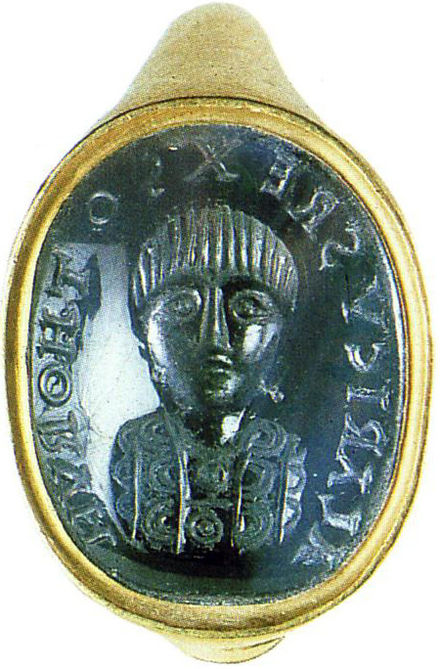
Another issue arose when I needed names for original characters. With regard to Gepids, the simplest solution would have been to use Gothic names, but even this is not without complications.
First, as I’ve discussed elsewhere, the Gepids may have been related to the Goths, and they probably spoke an East Germanic language similar to Gothic, but it’s still a leap to say their names would have been interchangeable. Of course, we know only a handful of Gepidic names, and just a few more Gothic ones, and in both cases, they have almost always been preserved in documents composed in Latin or Greek. These languages sometimes lacked the morphology to accurately replicate the sounds present in Gothic, which means the names were transformed in writing. We know this because an individual’s name is sometimes rendered different ways in different documents (or even within the same document!)
Other adjustments were also made. For example, many male Gothic names ended in –a, which was foreign to Greek, so instead, those names were rendered with the ending –as. A good example is the 6th century Gothic king Baduila/Badwila (“battle”+ diminutive ending), which was rendered variously as Totila/Badvila in Latin and Totilas in Greek. There may have been alterations in the transcription of female names as well, many of which would have looked and sounded quite unusual to Latin and Greek speakers.
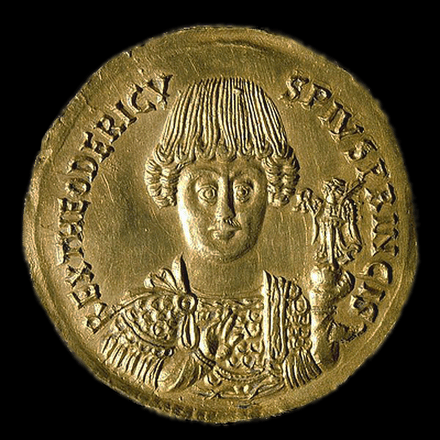
Additionally, Gothic names underwent transformation in Italy, which is where most documentation comes from. While Gothic reign in Italy was too brief to yield truly hybrid names (as was seen later among the Lombards), there are examples of Latin names with Gothic suffixes and vice versa. I suspect such names would not have been common among the Gepids. Suffice to say, I’ve tried to be circumspect when naming my Gepid characters.
As for my Lombard characters, there’s a different wrinkle to deal with…as far as I understand, the Lombard language underwent several “sound-shifts.” The Second Sound-Shift was probably underway right around the time they settled in Italy, although it continued over the next few centuries. By the time the Lombards started writing their names down (7th century and later), the shift was probably in full swing. The same names could have sounded different before and after the sound shift. For example, the common Lombard name ending –chis might well have sounded more like –gis in the mid-6th century. Reverse-engineering sound-shifts is way above my pay-grade, however, so I’ve reluctantly defaulted to a lot of post-sound-shift Lombard names. But I’ll admit it does sometimes bother me!
 A Queen's Cup