It’s hard to overstate how many hours I’ve lost to contemplation of Gepid political organization. Yet even after all this time (and all that I’ve written,) it remains illusive. The facts simply do not survive. I’m left with my own speculation built on whatever comparisons seem appropriate.
So which comparisons are fruitful to explore? Even that is up for debate. Obviously, there’s some attraction to considering Ostrogothic and Visigothic political organization, especially since I’ve decided to treat the Gepids as a “Gothic” tribe. And conveniently, the documentation for both these kingdoms is relatively robust. Among other sources, Euric’s Code gives insight into the Visigoths in the late 5th century while Cassiodorus’s Variae does likewise for early 6th century Ostrogothic Italy.
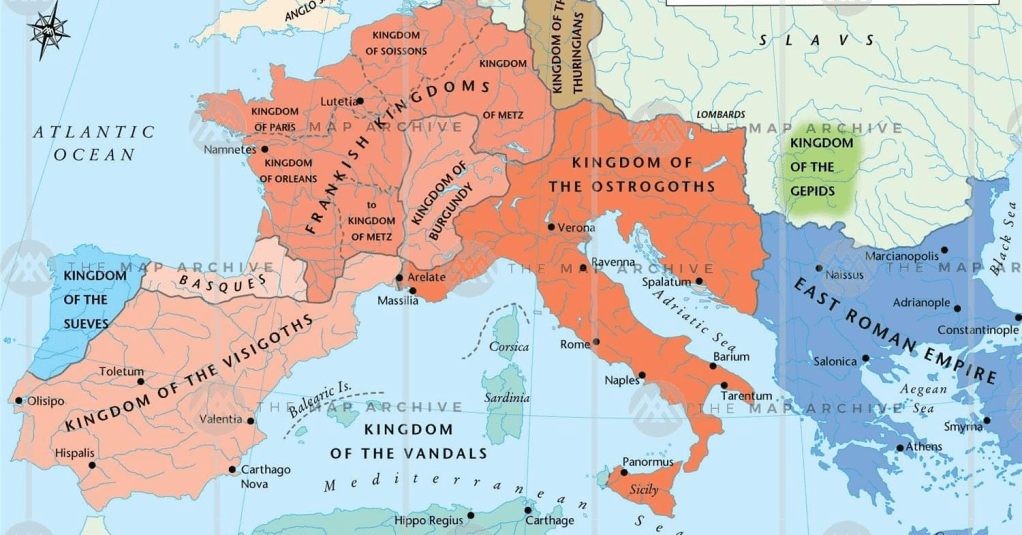
So why not simply import these military, civil, and court structures and call it a day?
Because the Visigothic and Ostrogothic examples existed in a fundamentally different context within the boundaries of the Roman empire (indeed Theodoric’s Ostrogothic kingdom encompassed the very heart of the Roman west.) These “barbarian” kingdoms represented a thin crust of military elite who ruled over a vastly more numerous Roman (or thoroughly Romanized) population. Theodoric styled his Ostrogoths as a Roman field army protecting a Roman population. They ensured internal peace and external security in exchange for payment out of taxes and other material support–essentially the same arrangement as had existed between the populace and the imperial military. Theodoric adopted Roman symbols, offices, and much of the civil administration of his new subjects. It was a conscious political project of romanitas. (Although there was some effort in some quarters to maintain a distinctive Gothic ethnic identity, it was probably doomed to failure given the demographic reality on the ground.)

In contrast, the Gepids did not live on longtime Roman territory (apart from the area around Sirmium). There were relatively few, if any, Romans living in the heartland of their kingdom. This is not to say they would not have been influenced by Roman culture and politics. The limes were never a hard border. Influences passed in both directions, although I think it’s safe to say that those on the “periphery” always oriented themselves towards the center. Rome was, to greater or lesser extent, a universal symbol of power exerting a gravitational pull on elites across Europe and beyond.
Although the core of the Gepids never settled in Roman lands, it is possible that they thought of themselves as “federates.” Some of their alleged statements to the eastern emperors suggest as much. But given the reduced state of development in Sirmium (described here), I seriously doubt they had much Roman civil administration to build from, especially when compared to the Ostrogoths in Italy or the Visigoths in France/Spain.
As for Gothic political organization before the migration into Roman territory, facts are quite limited. There is the interesting Passion of St. Saba, an account of a 4th century Gothic martyr. The details surrounding his persecution give some hints as to how the Goths were organized some 200 years before Rosamund’s time. They seem to have been settled in small villages according to kuni (clan). Most residents would have been related by blood or marriage. Each village belonged to a reiks–a warlord with a military following that functioned as his enforcement arm. The reiks could be an independent chieftain drawn from one of the noble families of the kuni, or in the retinue of the king (in the case of St. Saba, the reiks was a kinsman of the Gothic king). Unfortunately, the Passion has nothing further to say about the king or his household.
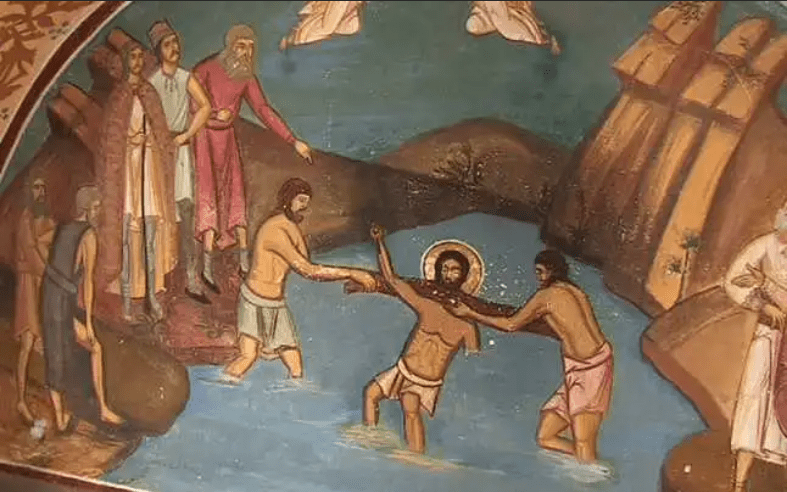
So, did the Gepids resemble the Goths of St. Saba’s time? The Visigoths and Ostrogoths of the 6th century? Or a political system somewhere in between? Factor in the potential for lingering Hunnic traces in their government, and one is left with a pretty ambiguous picture.
So. What do we have to work with? As described in my previous post, we know the Gepids had a king. At the time of Rosamund’s story, they also had a council of nobles with some influence over important matters of state. This suggests that there were at least a few semi-autonomous petty kings or chieftains within their territory. But the trend of the period was for the steady concentration of wealth and power into fewer and fewer hands. The uppermost echelon of the Gepid nobility was probably quite thin.
The king would have been surrounded at court by nobles, warriors, ecclesiastics, and various ministers. I suspect the entire apparatus would have had a military flavor. The king was, essentially, the dominant warlord in the land, and he distributed lands and fiefs to his favored followers. He was surrounded by a retinue of military retainers–his own sworn men–who were probably known by the Gothic term saiones. At court, they attended the king and provided personal service. But these men could also perform a variety of functions throughout the kingdom at the king’s direction, from administration of justice to specific civil and military projects. Ostrogothic saiones, for example, prepared invasion forces, made provision for the traveling court, investigated charges against nobles, etc. They also accompanied the king to war, where they served as his body-guard and made up the most elite element of the army.
A select subset of retainers served as the principal officers and ministers of the royal household. There was some variation in these offices among the various kingdoms for which we have documentation. The High Chamberlain was chief among them. He supervised the royal chambers, essentially controlling access to the king, and used this intimate position to secure gifts and advancement for himself and his allies. Additionally, in this period the royal treasure usually traveled with the royal household and was kept in the king’s apartments. The chamberlain, as master of the royal bedchamber, was responsible for transportation, receipt, and payment of treasure–all in all, a powerful position. Among the Ostrogoths, at least some of the known chamberlains were Gothic eunuchs, after the fashion of the imperial court in Constantinople. This didn’t tend to make them any less ambitious or devious, but it did minimize the risk of dynastic intrigues.
After the Chamberlain, important ministers included the marshal (who supervised the royal stables), the the treasurer (who–surprise!–managed the treasure), and the chancellor/royal secretary (who managed documents). Each of these officials would supervise a staff of subordinates. Although they usually resided with the court, they could be dispatched on special missions as representatives of the king.
There were, additionally, a whole host of other household officials. The sword-bearer, the bodyguard, the banner-man, the seneschal, the steward, the butler, the cup-bearer, the master of lodgings, the doormen and ushers, various hunters, etc. These were not low-level positions, even if they performed tasks we commonly associate with waiters, valets, and assistants today. It was a high honor to carve the king’s roast or carry his cup (assuming, of course, that they literally performed these tasks; it is possible these were ceremonial titles for supervisors of a serving staff or reflected duties performed only on special occasions). These were positions granted to favored followers.Together, all these officials were ingardjans–literally, the king’s housemates–although I’ve also seen suggestion that the proper term could be andbahtos (“those who serve”).
The king’s retinue also included his chief military men, commanders who could be entrusted to lead an army on his behalf. They were the equivalent of the Roman magistri militum during this period. The Gothic term for them may have been harjatugans.
Additionally, the Gepid kings of this period would have been confirmed Arian Christians. As far as I can tell from the scant information available, the Arian church did not have the same organization as its Nicene Roman equivalent. Although some bishops were attached to episcopal sees (the Gepid bishop Thrasaric of Sirmium, for example,) most were “bishops without portfolio” who traveled with the king and offered him spiritual–and probably political–guidance.
There is a related issue that also drives me to distraction, namely: how to “visualize” the Gepid court? How did they dress? How did they live? Where did they sleep? Where did they eat? Were the royal residences large and sumptuous, with many rooms and apartments? Or were they more modest, rustic affairs? Were they made of stone or of wood? How often did the court move or was it stationary?
The answer probably depends on where the royal court found itself at any given time. Many kings of this period tended to be peripatetic, for both political and practical reasons (discussed further here.) The historical record suggests that certain offices of the court were located in Sirmium on an ongoing basis. Here, one could probably find the royal chancery (if it, indeed, existed among the Gepids,) certain legal and financial administrations, the royal mint, etc. Some portion of the Gepid royal treasury may have been kept in Sirmium on a permanent basis, since contemporary historians note that it was handed over to the emperor–along with the city itself–after the fall of the Gepid kingdom.
Sirmium of the mid-6th century was a relatively rural settlement, although a few large-scale buildings survived from the city’s heyday before the coming of the Huns. No doubt some of the surviving buildings and ruins were repurposed for court use. For example, we know that in the city of Metz, the capital of Frankish Austrasia, the former basilica in the old forum had been transformed into a palace, while the Roman gymnasium became a church. I have no doubt that the Gepids exercised similar ingenuity in their own “capital” at Sirmium, even if the king spent much of his time elsewhere. But beyond the environs of the city and the thinly settled areas along the Danube, it seems that Gepid settlements had a more “barbarian” appearance. That’s not to say that wooden buildings cannot be comfortable and imposing. The East Roman envoys who visited the court of Attila in the 5th century were astonished by his elaborate wooden palace, which might have been built by Gepid craftsmen for all we know!
I’ve read pretty much all the English-language fiction I can get my hands on that is set in the 5th and 6th century kingdoms, and I’m often struck by how…medieval the setting seems, by which I mean high medieval. This doesn’t always seem to jibe with the traces in the ground. My suspicion is that there’s a sort of imaginative distortion happening because, although we do have images of early medieval kings, queens, and their courts, most of these artworks were actually made at a much later date.
For example…
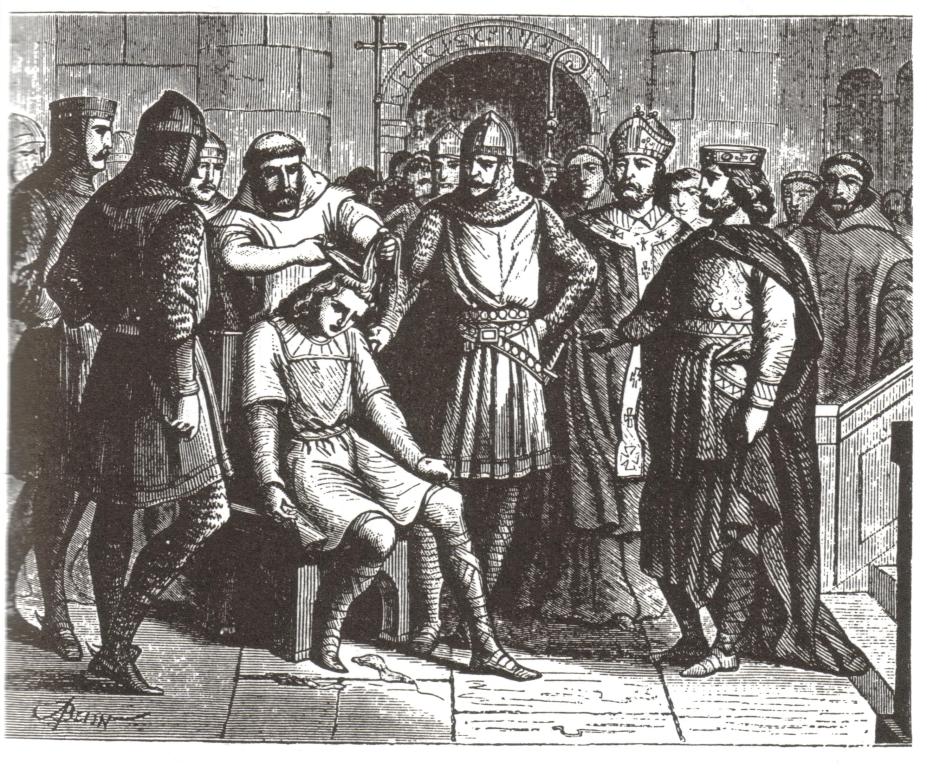
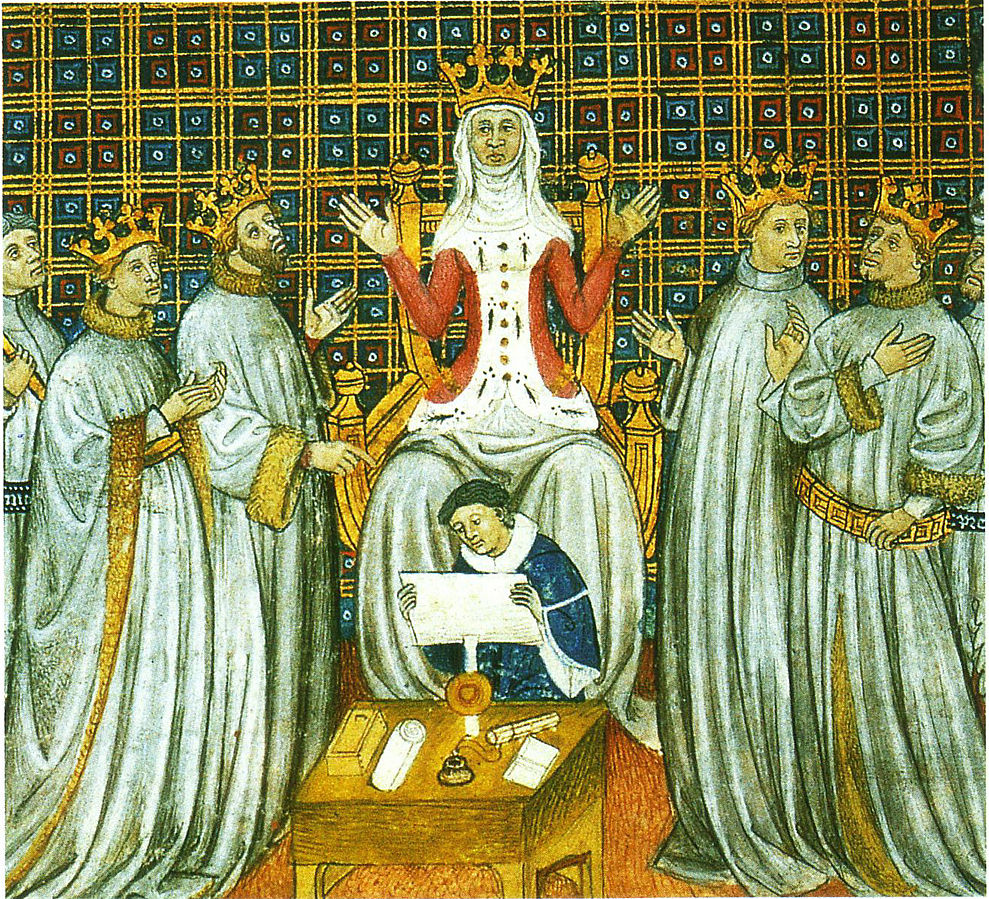
The image on the left is a 19th century illustration of a scene from 7th century Frankish history. It looks recent enough that no one would expect historical accuracy when it comes to dress or setting. The image on the right is an early 15th century illumination of a 6th century scene–it looks much older and more “authentic” to the modern eye, but it was created almost 1000 years after the events depicted!
To put this in perspective, think about what you are wearing right now, the building you are sitting in, the culture you inhabit. Now imagine someone in the year 1100. How are they dressed? What does their house look like? Would you be able to answer these questions without doing research? Honestly, the 15th century illustrators probably had a worse sense of what the early medieval royalty looked did than we do! At least we have archeology to guide us.
It’s easy to be influenced–even unconsciously–by images that probably aren’t all that accurate. I keep coming back to the archeological data, so far as it is available, and constantly remind myself that the politics, emotions, and strategies of the characters can be complex and refined, irrespective of their material environment. In the end, a royal court was deemed splendid or not according to contemporary tastes and experience. Their judgment need not match our preconceptions.
 A Queen's Cup