Early on in my research, I spent a lot of time just trying to wrap my arms around names and dates. I created my own timelines of Lombard and Gepid history and learned all that I could about the protagonists. One of these was Wacho, King of the Lombards from ~510-540. Wacho (whose actual name may have been something more like “Waldchis,”) was a member of the noble Lething dynasty. He came to power by killing his uncle, King Tato, and various rival kinsmen. Despite the rocky start, he proved a capable king, and much of his success was based on the strategic marital alliances he arranged both for himself and his children.
According to the Lombard chronicles, Wacho married three times. His first wife was Raicunda, a Thuringian princess. This marriage was apparently without surviving issue. His second marriage was to a Gepid princess, Ostrogotho (“Austrigusa” in Lombardic,) which produced two daughters, Wisigarda and Waldrada. Both girls would eventually marry Merovingian royalty. Finally, he married Silinga, the daughter of the Herul king Rodulf, who was defeated by the Lombards under their former king, Tato. Silinga gave Wacho his son and heir, Waldari.
But as I mulled over this account of Wacho, his wives, and their children, a few details kept bothering me.
First, I wondered why a Herul princess was Wacho’s third wife instead of his first. The Heruls were only recently defeated when Wacho came to power and were in the process of being absorbed into the federation of tribes under Lombard dominion. Wouldn’t it have made more sense for Wacho to marry a Herul princess immediately after coming to power? Additionally, Silinga is described in some places as the “young daughter” of the slain Herul king. How could that be if she married decades after her father’s defeat?
Likewise, I found issues with Wacho’s marriage with the Gepid princess, Ostrogotho. Supposedly she bore him two daughters, yet the girls seemed to be vastly different ages. The elder daughter, Wisigarda married the Frank Theudebert I in 537 after an unusually long engagement of 7 years (the delay is a story in itself, but suffice to say, the Merovingian Franks are the definition of a hot mess.) Interestingly, Wisigarda’s tomb was discovered in Cologne Cathedral in 1959. She had died in 540, only a few years after her long-delayed marriage, at around the age of 30. Her sister Waldrada was connected with numerous Merovingian kings and noblemen in the course of her life, but she first married King Theudebald I (who was, incidentally, the son of Wisigarda’s husband, making him Waldrada’s…step-nephew?) around 548.
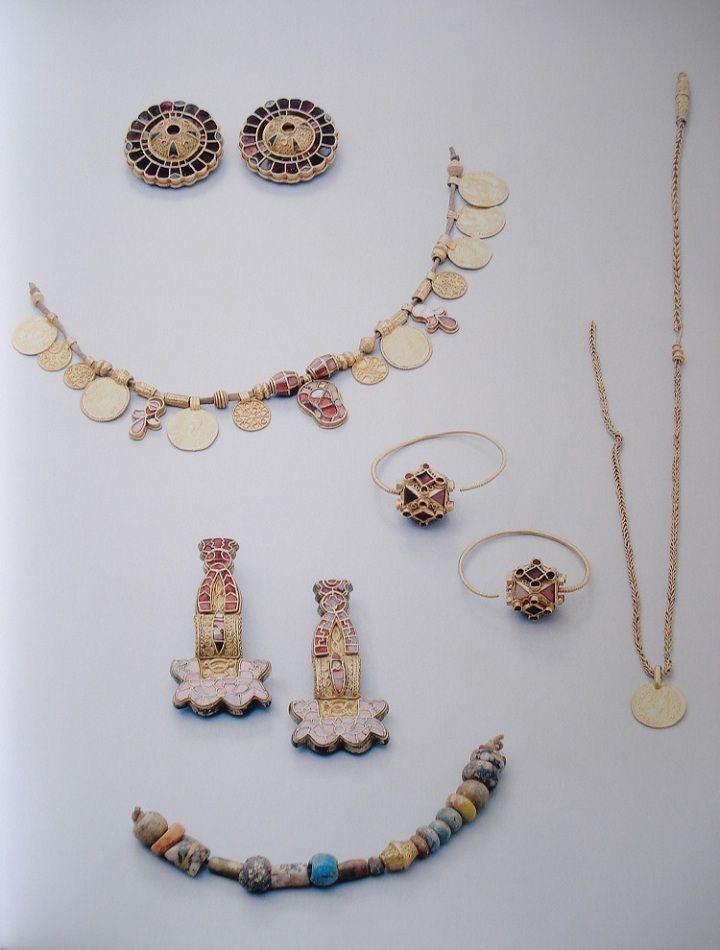
Additionally, I couldn’t help but notice a similarity between Waldrada’s name and that of her reputed half-brother Waldari. Don’t they just sound like a matched pair? Maybe even twins? But the English-language sources were definitive about the order of Wacho’s wives and their offspring, so I put my suspicions aside.
Months later, however, I came across a Hungarian source (Hunok-gepidák-langobardok by István Bóna, et al.) that solved the mystery! Not only does Bóna’s theory eliminate the age issues, it provides a much more sensible account of Wacho’s political machinations. Say what you will about his methods, Wacho was a capable operator. The politics of the time were complicated, and players like Wacho were canny and logical. Each of his marriages served the political imperatives of the moment.
According to Bóna, Wacho first married the Herul princess Silinga as a means of legitimizing his reign shortly after usurping the throne ~510. Her father was only recently defeated, so she may well have been a child bride. Marriage to the daughter of a well-known king would have boosted Wacho’s reputation and possibly also won him support among his new Herul vassals. Additionally, he probably couldn’t have found a better wife. The exalted dynasties of the neighboring kingdoms were unlikely to marry their daughters to a man who came to power under such unsavory circumstances. It is unknown whether the union produced children. Shortly after taking power, Wacho launched a campaign to subdue more neighbors, this time the Suebi. His victory cemented his position as king and secured the Lombards’ foothold in northern Pannonia.
Ten years later, Salinga was off the scene. Wacho married the Thuringian princess Raicunda around 520. At this time, Wacho was concerned with navigating relationships with the great powers of the day–the Ostrogothic kingdom of Italy, the Eastern Roman Empire, and the increasingly aggressive Franks. His new wife’s family was allied with Theoderic “the Great”, king of the Ostrogoths and undisputed “great man” of his time. Theoderic could have challenged the southward expansion of Wacho’s Lombards, so this was a useful connection.
He had a single daughter with Raicunda–Wisigard–whom he eventually married to King Theudebert–thus gaining a Frankish connection.
Eventually, Wacho allied with the Emperor Justinian, who granted him rights to the former Roman lands of Pannonia all the way up to the river Drava. The Gepids were Wacho’s neighbors across the new frontier. This is when he made his third and final marriage to Ostrogotho, daughter of the Gepid king. Their marriage facilitated peaceful relations between their peoples for almost a generation. Ostrogotho was the mother of Waldrada and Waldari, who were indeed full siblings and close in age.
The reordering of Wacho’s marriages brings new overtones to the political situation immediately before Rosamund comes onto the scene. Wacho apparently had no son to inherit his throne until quite late in life. Prior to Waldari’s birth, his heir was a man named Risiulf, a kinsman of both Wacho and the murdered King Tato, all members of the noble Lething clan. But when Ostrogotho finally gave Wacho a son, the tide turned against Risiulf. Wacho exiled him. Risiulf was assassinated, but his son–Hildigis–survived. He is an interesting figure moving around the margins of Rosamund’s story–the exiled pretender still angling for the throne.
Meanwhile, the elderly Wacho finally died and was succeeded by his young son, Waldari. Ostrogotho would have taken an active role in her son’s affairs, angling for external supports to prop up his reign. She married her young daughter to King Theudebald, but he was only a child himself and did not live long enough to prove a useful ally. Still, Ostrogotho must have taken comfort in the proximity of her own father, trusting in him to defend her son’s rights until he came of age.
Then Ostrogotho’s father died of disease. Rosamund’s grandfather usurped the throne from Ostrogotho’s young brother, the rightful Gepid heir, who fled to her for protection. Now Ostrogotho faced the prospect of preserving two underage kings–an unenviable position.
It wasn’t long before the wolves closed in. Her son died before reaching his majority. It is likely he was murdered by his appointed guardian, who then usurped the Lombard throne. That man was Audoin of the Gausi , the father of Rosamund’s eventual husband. As for Ostrogotho’s fate, little can be known for certain. I suspect she was probably eliminated for political reasons.
So, what is the true tale of Waccho and his three wives? The accounts found in the Lombard chronicles written centuries after the fact? Or Bóna’s tantalizingly dramatic reconstruction? Personally, I go with the latter. In my mind, Ostrogotho’s tragic struggle to protect her son and, eventually, her brother is a sort of prequel to Rosamund’s tale. Her story is slightly less cinematic, but it has all the ingredients of a good drama. Politics, intrigue, betrayal, and a mother’s love–what more can you ask for?
 A Queen's Cup
Pingback: The cup(s) in question–Part 3 | A Queen's Cup
Pingback: Women’s Traces, Part 2: The missing mother | A Queen's Cup
Pingback: The Gepid State, Part 3–The Queen | A Queen's Cup
Pingback: Women’s Traces, Part 3: Living Gifts | A Queen's Cup