Paleogenetics–the collection, analysis, and interpretation of ancient DNA–sheds new light on the movement and interaction of human populations. The bodies of the dead can sometimes speak, even when their graves are disturbed and the historical record is silent. So I was extremely interested to read a recent paper, Maternal Lineages of Gepids from Transylvania by Alexandra Gîngută, et als., published in the journal Genes.
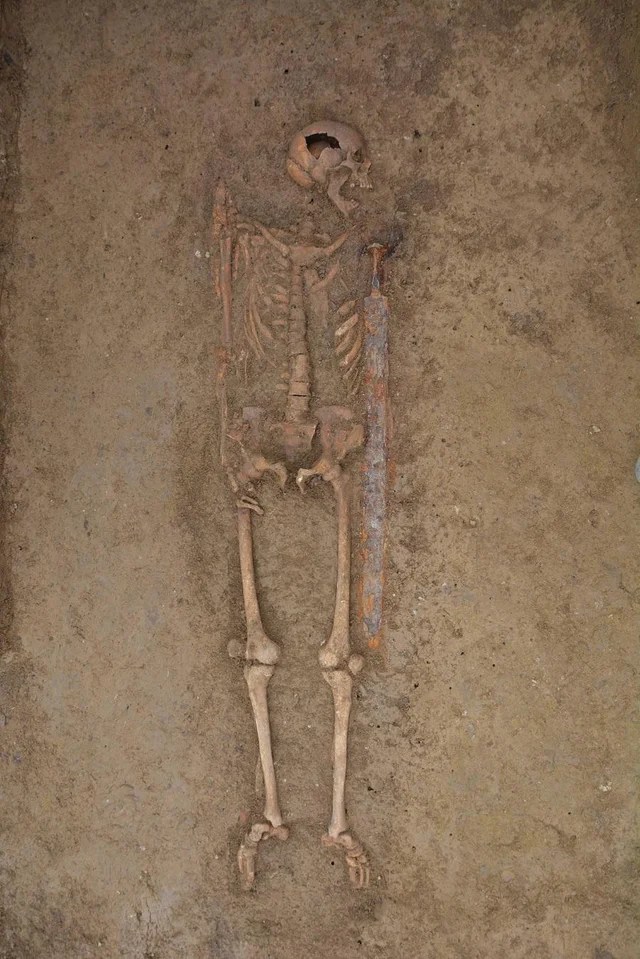
In this paper, the authors collected and analyzed mitochondrial DNA specimens from cemeteries in Transylvania, Romania. Archeologists attribute these graves to the Gepids, based on information such as location, burial orientation, grave goods, dress, etc. The bodies dated from the late 5th through early 6th centuries. Since mitochondrial DNA is inherited through the mother, this genetic data reveals the maternal lineages of the Gepids. The results could then be compared to previously identified macrohaplo-groups to suggest genetic origins and affinities of the sampled individuals.
The results revealed that the Gepids buried in the cemeteries mostly derived from western Eurasian lineages, particularly Northwestern European lineages. In particular, the authors noted affinities with samples from the Wielbark Culture, long speculated to be connected with the Gepids based on their material traces. This suggests that the Gepids arrived in Transylvania from the area of modern north and central Poland. They share genetic structures with nearby communities dating back to the Bronze Age. This is the first scientific data to actually confirm the historical account of the Gepids’ origins.
The authors also found genetic similarities to a 7th-9th century Anglo-Saxon sample, a Lombard specimen from Italy, two specimens from 16th century Finland, and even a few modern Danish samples. Like the Gepids, these genetic structures were mostly characteristic of Northwestern European lineages.
Interestingly, the authors detected only one Asian lineage, which suggests the Gepid population (at least in Transylvania) did not mix significantly with Huns or other Asian populations. I could easily imagine a different result, since the Gepids were associated with the Huns for some time, but either way, this is interesting information to have. It is also possible that intermarriage only occurred at the highest levels of society, which might not have been captured by 46 Transylvanian samples, but that is only my speculation.
 A Queen's Cup
Very nice to see this level of genetic research incorporated into historical fiction. I’m a follower of Ginguta’s studies. Fascinating story. Looking forward very much to the upcoming novel. Best of luck.
LikeLike