What language did the Gepids speak? They left no written traces that would provide an answer to this simple question. It is possible they spoke a Gothic dialect, but if so, how similar was their spoken language to the what we know of Gothic based on limited written survivals?
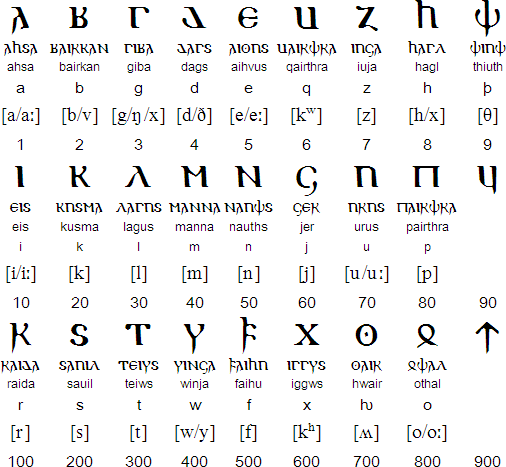
Most of what we know about the Gothic language comes from a few fragments of the Gothic-language Bible, which was first translated under the supervision of a bishop named Ulfilas. (Incidentally, most of these these precious codices are 6th century copies of older manuscripts that have not survived.) Ulfilas (Wulfila in Gothic) was the son of Christian Greeks captured by Goths. He was, thus, raised with a foot in two worlds. He eventually became a priest and a missionary among the Goths, converting many of them to Christianity in the 4th century. As part of his work, Ulfilas decided to translate the Greek bible into Gothic, but first, he needed to devise a Gothic alphabet. His letters seem to draw on Greek, Latin, and Runic influences.
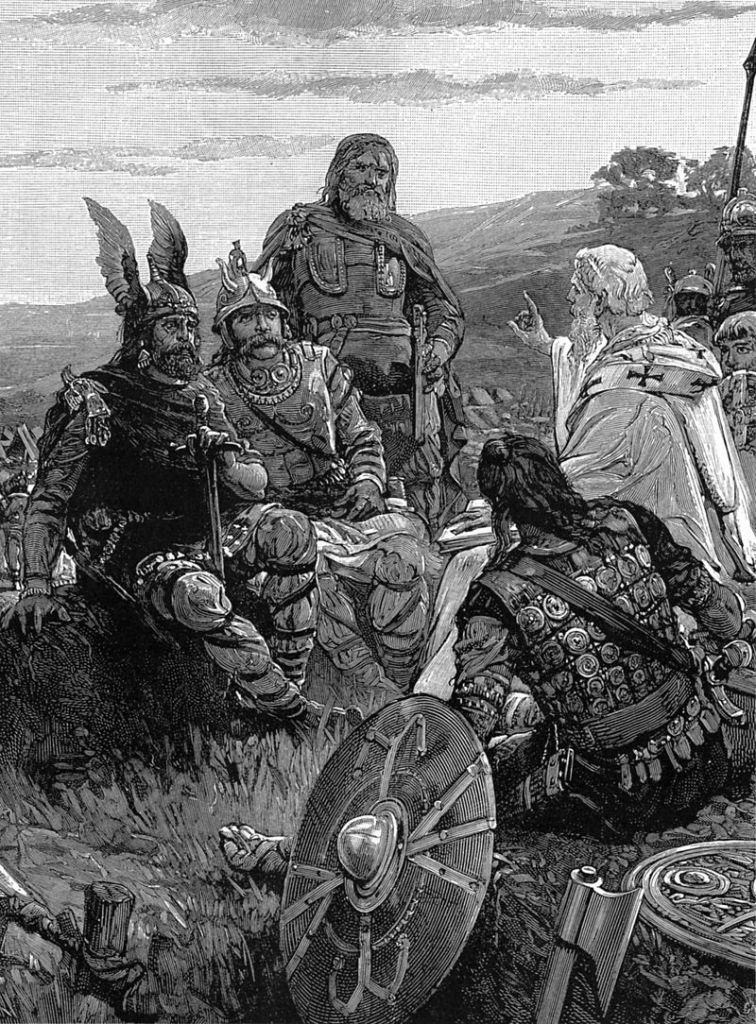
We have very little documentation of Gothic aside from the surviving portions of Ulfilas’s Bible. Although the Ostrogoths established a major kingdom in Italy in 493, they set about creating a state that was purposefully Romanized–right down to the language. While many of the Goths who settled in Italy surely continued to speak–and presumably write–in their native tongue, almost no record of it survives.
So, is it reasonable to assume that the Goths (and possibly Gepids) of the 6th century spoke a language similar to that of Ulfilas’s Bible? Ulfilas died in 383. My story begins in the 560s. I suspect a fair amount of linguistic evolution occurred in that time. Even if Ulfias’s Bible was still understood in the 6th century, it might be akin to how a modern person is able to read and understand the King James Bible, even though it does not reflect the way we actually speak today.
But, you may be thinking, Rosamund was a Gepid, not a Goth. True, but contemporary sources suggest that the Gepids were relatives of the Goths, and with so little to go on, I’ve decided to treat them as such. Realistically, I think it is likely that the Gepids spoke an East Germanic language. Possibly they spoke a dialect of Gothic, or perhaps they had a distinct language. With no surviving documents, it’s impossible to say. And even if the Gepids did speak some version of Gothic in the 6th century, it probably wasn’t identical to Gothic of the 4th century.
Nevertheless, I’ve made a choice to use some Gothic words in my manuscript thus far. It’s something I wrestle with constantly. On the one hand, using Gothic terms underlines the fact that this is a culture complete unto itself. On the other, I’m pretty sure these words are not as Rosamund would have spoken them. I’ve tried to confine myself to using only those words that highlight a particularly “foreign” or significant concept within Rosamund’s understanding, things which are, to some extent, “untranslatable.”
A second question also arises with respect to language: would the Lombards and the Gepids have been mutually intelligible? We know that the Lombards had their own language, although frustratingly few examples of it survive from the early medieval period. By all indications, it seems to be a West German language that had undergone certain sound shifts by the 6th century. For this reason, I suspect it would have been quite difficult for Gepids and Lombards to understand one another.
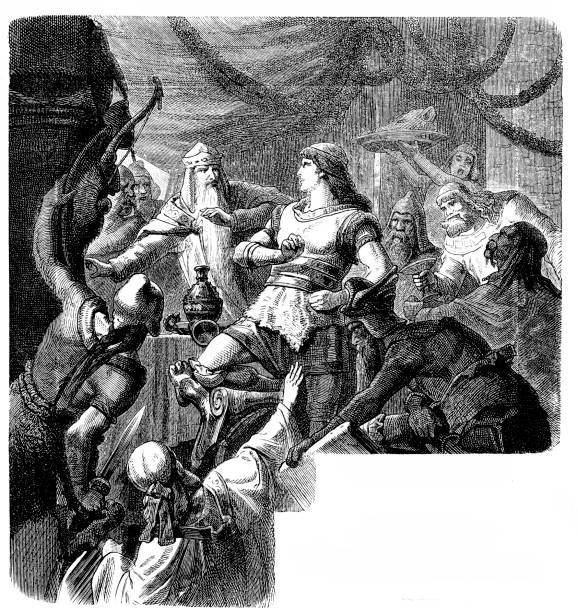
Ultimately, however, I have to allow free communication between Rosamund and Alboin or seriously undercut the dynamics of their story. It’s hard to have a climactic scene where characters verbally spar if they need to wait for their insults to be translated. Here, reality must bend to dramatic convenience.
 A Queen's Cup
Pingback: When is a fly not a fly? | A Queen's Cup