Sometime around the year 600, a Gepid mercenary committed murder . His victim was a bodyguard of the Emperor Maurice who had been taking part in an impromptu deer hunt. When the bodyguard became separated from the other hunters, the Gepid fell upon him and threw his body into a nearby ravine. The motive: greed. From his victim, the Gepid took a precious golden belt.

The murderer was just a common soldier. He couldn’t wear such a fabulous item without attracting undue attention. So, very logically, he decided to have the belt broken down for its raw materials. The goldsmith hired for the job immediately became suspicious, however. How on earth had a barbarian soldier come by such a priceless jewel? He alerted the relevant authorities in Constantinople, and the Gepid was soon apprehended on charge of murder.
At trial, the “swaggering” Gepid unspooled a cunning yarn in his own defense. He claimed that he had acquired the belt, not from the unfortunate bodyguard, but as war booty. He recounted how the Lombard king, Alboin, had harbored a desperate desire for a certain daughter of the Gepid king Cunimund, which culminated in his abduction of the girl. “When [Alboin] was unable to persuade by speech, he proceeded to action by force.” He organized an ambush and abducted the Gepid princess. This immediately sparked a war between the neighboring tribes. Eventually, the Romans were brought into the conflict on the side of the Gepids. The accused claimed to have been present at the battle that decided the war in his people’s favor. Supposedly, he took the belt from the body of a bastard son of the Lombard king, which explained its superior quality.
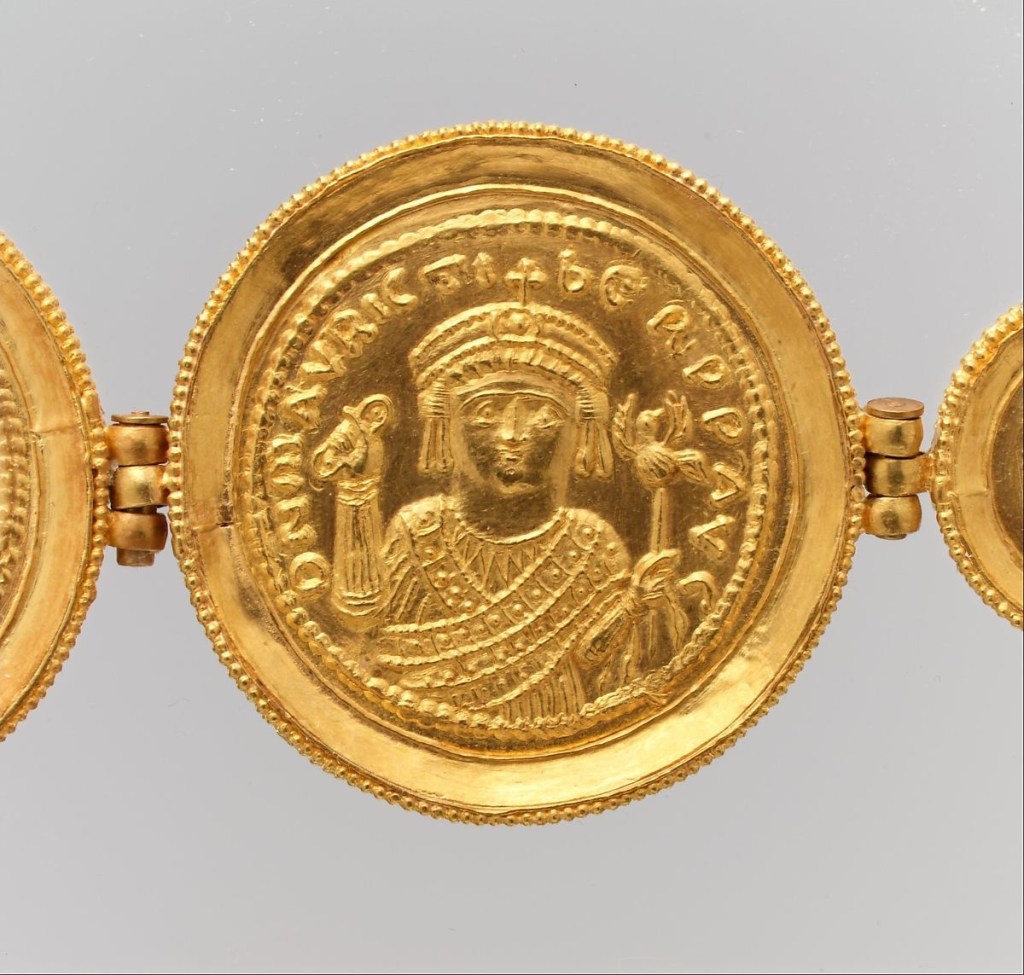
This incredible story swayed the court, and the Gepid was soon released. But, as one of the court officials mulled over the details, he realized it had to be a fabrication. The war between the Gepids and the Lombards had occurred some 30 years prior; the accused was far too young to have taken part in the decisive battle. The guards ran after the Gepid and hauled him back into court. Under torture, his story unraveled in a mess of contractions until he finally confessed his guilt. He was condemned to a grisly death: “consigned to the teeth of beasts, and next…as victim to all-consuming fire.”
This curious interlude comes to us from the East Roman historian Theophylact Simocatta. He deemed the Gepid’s alibi a rather clever defense. As is sometimes said, the best lies incorporate a modicum of truth. While there were many flaws in the Gepid’s story, certain elements were indeed historically accurate. For example, we know from the sources that Emperor Justin II did send one of his generals to aid the Gepids in their war against the Lombards and that the Lombards were eventually defeated in battle in 566.
All this begs the question–are other aspects of the Gepid’s tale also true? Did Alboin really nurse a reckless desire for a Gepid princess? Did he go so far as to abduct her? Was this girl, in fact, Rosamund?
Honestly, I don’t care if the Gepid murderer was telling the truth or or if he invented these details whole-cloth. They offer so many narrative possibilities, I can’t help but include them in my own story.
More than a few of my plot points are like this–a little bit fanciful, possibly untrue, but just too intriguing to leave by the wayside. In my defense, all of them have some potential basis in reality and/or the endorsement of at least one or two historians. There is one historical hypothesis in particular that is so crazy—yet so compelling—I simply couldn’t resist placing it at the heart of Rosamund’s story. As for what it is…you’ll just have to wait and see!
 A Queen's Cup