Very early on in my outlining, I realized that I would have to play around with the historic timeline in order to tell Rosamund’s story to best effect.
The showdown between the Gepids and the Lombards unfolded in two main phases–549-551 and 565-567. In the conventional telling of Rosamund’s life, the first phase concludes with a Lombard victory at the Battle of the Asfeld in which her uncle, the heir to the Gepid throne, is killed by Alboin himself. Thereafter, a truce is declared. But while the Gepids are still in mourning, Alboin presents himself at their door for a ceremonial handover of the slain prince’s weapons. By most accounts, this was Rosamund and Alboin’s first meeting–a dramatic and emotional encounter, no doubt!
Unfortunately, it almost certainly never happened. If Rosamund attended the feast of truce, it was as a fetus in her mother’s womb. She was most likely born a year later, in 552. By my best estimates, Alboin himself was born around 540. That would make him only 9 or 10 at the time of his famous victory at the Asfeld. It seems likely that the entire interlude is a romantic invention intended to ratchet up the tension and foreshadow the tragic events that followed.
The timeline becomes a bit disturbing once it’s followed to its most realistic conclusions. Rosamund was probably only 14 or 15 when she was forced to marry her father’s killer. She died before she was 20. In light of all this, it became clear that I would need to “massage” the dates to make for a more compelling–and palatable–narrative.
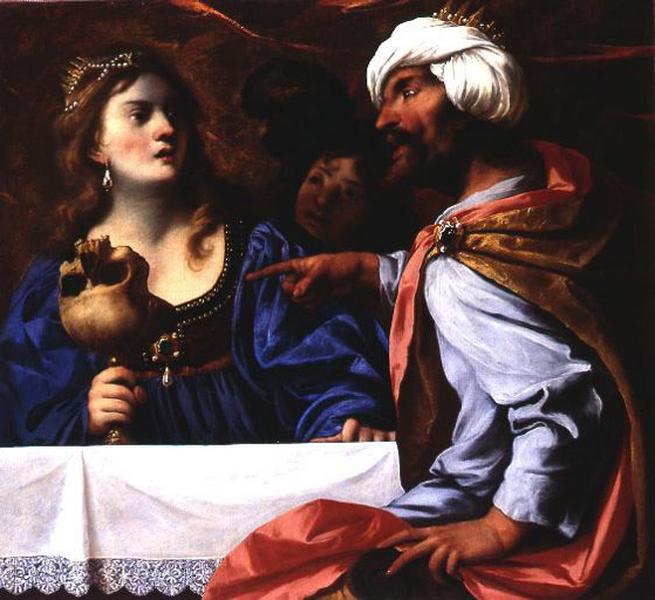
My solution was to compress the major events of both “clusters of conflict” into a compact, 8-year period. The Battle of Asfeld moved forward in time, from 552 to 559. I likewise moved Rosamund and Alboin’s birthdays to make them better ages for the story. A birthday of 549/550 for Rosamund now makes her about 10 when she first meets Alboin, and around 18 when they marry. A birthday in the mid 540s makes Alboin a teenager when he wins his first major victory–still remarkably young, but somewhat more plausible. This adjustment also places his birth right around the time his father, Audoin, usurped the Lombard throne from the previous king. Although it will probably never come up in the narrative, I liked the idea that Audoin was partially motivated to seize power by the birth of a son and visions of an incipient dynasty.
So what did I loose in this compression? Mostly, some interesting (to me at least!) political intrigue. The first conflict between the Gepids and the Lombards occurred from 549-551, but in political terms, their regional squabble was surely overshadowed by the ongoing war between the Eastern Roman Empire and the Ostrogothic Kingdom of Italy. This timing at least partly explains why the eastern emperor Justinian was so eager to broker a peace between the Lombards and Gepids after the Battle of Asfeld–he wanted their troops fighting for him in Italy instead of against one another. The Lombards did send a large contingent of warriors to Italy shortly thereafter, and a Gepid soldier killed the Gothic king Totila in the Battle of Taginae in 552.
Ultimately, however, these political machinations were only a minor sacrifice. Intrigues surrounding the Gothic Wars ultimately have little bearing on Rosamund’s story. And while I do generally strive for historical accuracy, sometimes fact must bend to the imperatives of fiction.
 A Queen's Cup
Pingback: Women’s Traces, Part 3: Living Gifts | A Queen's Cup